
- Blog
- Your First Toolbox: The Only 10 Automotive Tools You Need for Basic Car Upkeep
Your First Toolbox: The Only 10 Automotive Tools You Need for Basic Car Upkeep
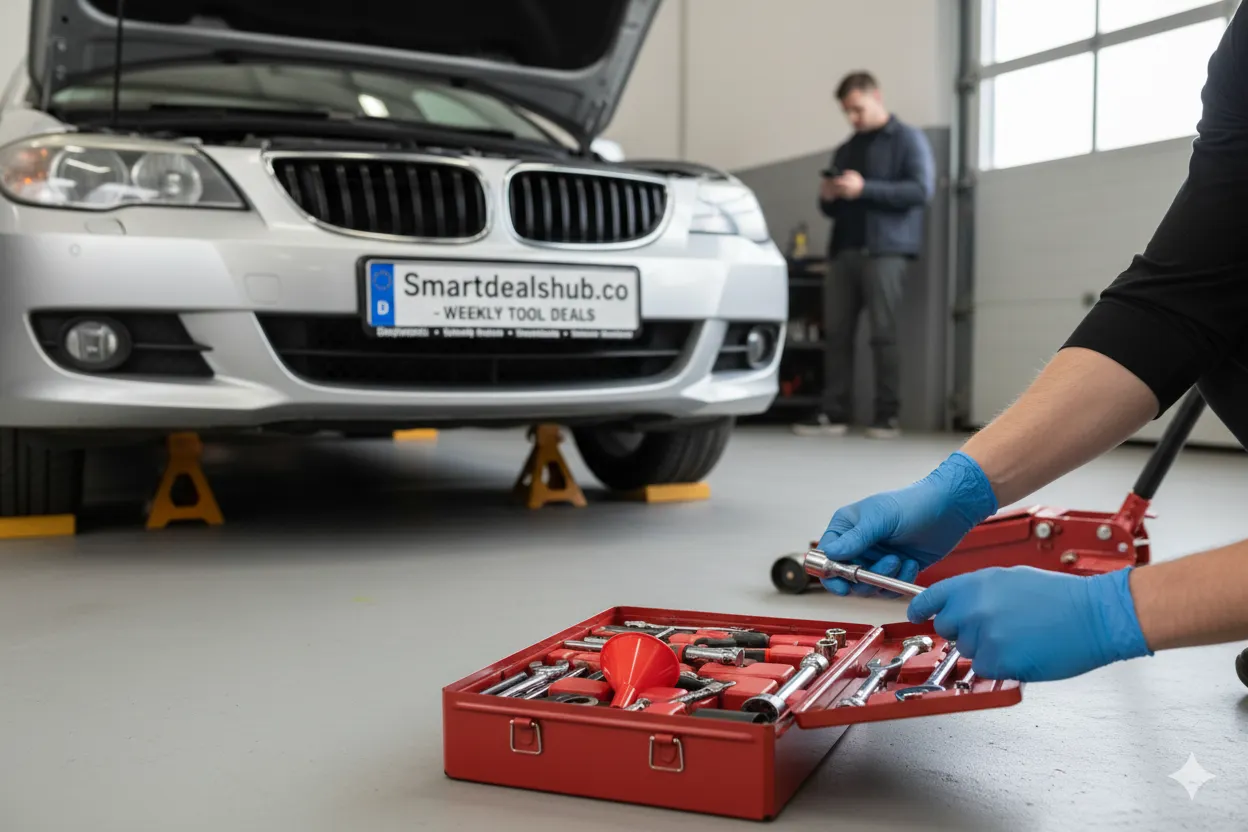
That dreaded light flashes on your dashboard, or you hear a new, unfamiliar noise coming from under the hood. For most car owners, this moment is met with a familiar feeling of dread. It’s the feeling of a problem you don’t understand, and the looming thought of an unexpected, expensive bill from the mechanic.
In today’s world, it’s easy to feel that modern cars are just complex black boxes that we aren’t meant to touch. But while it’s true that major engine repairs are best left to the professionals, there are dozens of simple, routine maintenance tasks and minor repairs that you can absolutely do yourself. With a small, one-time investment in a basic toolkit, you can save hundreds, if not thousands, of dollars over the life of your car and gain a wonderful sense of confidence and self-reliance. This is your guide to building that first, essential automotive toolbox.
You Don't Need to Be a Mechanic
Let's get one thing straight right away: this is not about learning to rebuild an engine or a transmission. This is about empowering you to handle the simple, common tasks that mechanics and quick-lube shops often charge a surprisingly high amount for. We’re talking about things like changing your own windshield wipers, checking and topping off fluids, testing and replacing a car battery, or even performing a basic oil change.
Before we start, a quick word on safety is crucial. Always work on your car on level, solid ground when the engine is cool. Never, ever get underneath a vehicle that is only supported by a jack; always use a pair of sturdy jack stands. Safety is always the most important tool you have.
Buying Your First Kit vs. Buying A La Carte
There are two great ways to get started. For a total beginner, buying a pre-made "mechanic's tool set" can be a fantastic, cost-effective choice. You can often find a 100- to 150-piece set at stores like AutoZone or O'Reilly that contains almost everything on this list. For those who prefer to build their kit one piece at a time, this guide will serve as your shopping list for the most important foundational items.
Deeper Dive: The Core Four of Your Toolkit
These four items are the absolute non-negotiable foundation of any automotive toolkit. With these, you can tackle a huge number of basic tasks.
Tool #1 & #2: A Good Socket Set and Wrench Combo
This is the heart and soul of your entire toolbox. A good socket set, complete with a ratchet handle and various extensions, is what you will use to tighten and loosen the vast majority of nuts and bolts on your car. Paired with a set of combination wrenches (which have one open end and one box end), you will be able to reach almost any fastener, even in tight spaces where a socket won't fit.
How it pays for itself: The very first time you use this set to change your own car battery—a simple 15-minute job that a repair shop can charge over $100 in labor for—this entire set has likely paid for itself.
Tool #3 & #4: A Sturdy Jack and Jack Stands
To do any work that involves your tires, you need to be able to lift your car safely. A hydraulic floor jack is much easier and more stable to use than the flimsy scissor jack that comes with your car. Jack stands are the critical safety component; they are strong, sturdy supports that you place under the car's frame to hold it securely in the air.
How it pays for itself: A single tire rotation at a shop can cost anywhere from $20 to $40. By doing it yourself just two or three times, these essential tools will have paid for themselves. More importantly, they give you the ability to safely inspect your brakes or change a tire without worry.
Smart Comparisons: The Tools for Checks and Changes
Once you have your core four, you can add a few more specialized tools that will allow you to perform some of the most common and money-saving maintenance tasks.
The Fluid and Air Brigade
This group of simple tools is all about checking and maintaining your vehicle's vital fluids and pressures. This includes a tire pressure gauge, a funnel, an oil drain pan, and an oil filter wrench.
How they pay for themselves: A simple $5 tire pressure gauge can help you keep your tires properly inflated, which can improve your gas mileage by up to 3%. Over the course of a year, that adds up to significant savings. Being able to top off your own washer fluid or antifreeze with a funnel saves you a trip to the shop. And if you feel adventurous enough to change your own oil—a job that can cost anywhere from $50 to $100—the drain pan and filter wrench are essential tools that pay for themselves after just one use.
The Electrical Lifesavers
Dealing with a car that won't start is one of the most stressful situations a driver can face. This is where two simple electrical tools come to the rescue: a good set of jumper cables and a basic multimeter.
How they pay for themselves: A quality set of jumper cables can save you from a single, expensive tow truck call or a roadside assistance fee, paying for itself instantly. A multimeter might look complicated, but it's a simple device that can test the voltage of your battery. It can tell you if your battery is truly dead and needs replacing, or if the problem might be with your alternator, preventing you from spending $150 on a new battery you didn't even need.
Your Roadmap to Automotive Savings
Taking control of your own basic car care is one of the most empowering and financially smart things you can do as a car owner. It erases the fear of the unknown and replaces it with the confidence of self-reliance. You don’t need to be a professional mechanic with decades of experience; you just need a few foundational tools and the willingness to learn.
This basic toolkit, from the socket set and wrenches to the jack stands and electrical testers, is your starter pack. The entire collection will enable you to handle dozens of tasks and will undoubtedly save you a fortune in labor costs over the years.
Building your automotive toolkit is a smart investment. An even smarter one is getting the best possible price on those tools. Auto parts stores like AutoZone, Advance Auto Parts, and O'Reilly all run weekly promotions on tool sets, motor oil, and other essentials. Before you start building your kit, check out the flyers on Smartdealshub.co. You can see who has the best deals this week and start your journey to DIY savings by saving on the tools themselves.
blog.latest_articles



CATEGORIES
Copyright © 2026 Catalogue 365. All rights reserved. It is forbidden to copy or reproduce the texts without prior written agreement. Product photos, images and brochures are for illustrative purposes only. Discounted prices come from official distributors listed on this site. Offers are valid from and until the expiration date or while supplies last. The purpose of this site is informative and cannot be used to claim the products. Prices may vary depending on the location.